.svg)
.svg)

.png)
.png)

Looking into Perfecto reviews means sifting through a lot of generic feedback that doesn't tell you much about day-to-day usage. The real questions are whether iOS tests actually run slower, if device wait times will block your CI pipeline, and how pricing works when you're not an enterprise team. This post breaks down what Perfecto does well, where it falls short, and what other tools solve similar problems.
TLDR:
- Perfecto provides cloud access to 3,000+ real devices for testing but requires you to write and maintain test scripts in Selenium or Appium
- Pricing starts around $300/month but typically runs $15,000-$100,000+ annually based on device access and concurrent users
- iOS tests run slower than Android, high-demand devices have wait times, and flaky tests require frequent reruns
- Docket uses coordinate-based vision testing that self-heals when UIs change, eliminating selector maintenance that breaks Perfecto workflows
What is Perfecto and how does it work?
Perfecto is a cloud-based testing service that provides access to thousands of real mobile devices and browsers for automated and manual tests. Instead of buying and maintaining a physical device lab, you connect to Perfecto's infrastructure and run tests on devices they host in data centers.
The workflow is straightforward. Write test scripts using Selenium, Appium, or Espresso, then point them at Perfecto's cloud. Perfecto spins up the requested device (for example, an iPhone 15 running iOS 17), runs your test, and streams back video recordings, logs, and screenshots.

Perfecto acts as device cloud infrastructure, not an intelligent testing agent. You still write and maintain your own test automation code. The value is convenience and coverage: access to hundreds of device and OS combinations without procurement, setup, or physical maintenance overhead.
Teams use Perfecto when they need broad device coverage for mobile apps or cross-browser validation for web applications. It integrates with CI/CD pipelines to trigger tests on every commit and verify code works across your target device matrix.
Perfecto features
Perfecto offers a cloud-based device lab with over 3,000 real devices covering iOS, Android, and desktop browsers. This removes the overhead of purchasing and maintaining physical hardware in-house.
Test Execution and Frameworks
The service supports Selenium, Appium, Espresso, XCUITest, and Cypress. You write tests using your existing framework, then run them remotely on Perfecto's devices. Parallel execution across multiple devices reduces regression time when validating across many configurations.
CI/CD and Integrations
Perfecto connects to Jenkins, GitLab, Bitbucket, Azure DevOps Server, Visual Studio, Jira, and Slack. This allows automated test triggers on commits and routes results to your issue tracker or team channels.
Additional Capabilities
Network virtualization simulates varying connection speeds and conditions. Heatmap reporting visualizes tap frequency during manual sessions. Scriptless recording tools generate replayable tests from user interactions, though most teams use coded automation for complex cases.
Every test session produces video recordings, device logs, and performance data for debugging.
Perfecto pricing
Perfecto uses custom enterprise pricing without published rate cards. Starting costs begin around $300 per month, but actual spend varies based on usage requirements.
Annual contracts typically range from $15,000 for smaller teams to over $100,000 for large enterprises running high volumes of parallel tests.
Pricing depends on concurrent user seats (how many team members can trigger tests simultaneously), device cloud access (which devices and OS versions you need), and premium features like network virtualization, heatmaps, and advanced analytics.
Perfecto requires you to contact sales for a quote tailored to your device matrix, user count, and test volume. This enterprise pricing model is common among device cloud vendors but requires going through a sales cycle before you can budget accurately.
Perfecto key limitations and gaps
Performance and Reliability
iOS native app execution runs slower than Android tests on the same infrastructure, which extends regression suite runtime when your test matrix includes Apple devices. Test scripts that pass initially may fail on subsequent runs without clear explanation, requiring reruns or investigation into environment inconsistencies.
Network instability interrupts testing sessions, creating problems for distributed teams or regions without reliable connectivity. Perfecto requires stable internet throughout all test execution.
Device Availability and Debugging
High-demand devices may have wait times during peak hours, particularly newly released iPhone models or popular Android flagships. This creates bottlenecks when multiple teams compete for the same hardware.
Defects identified on cloud devices cannot always be replicated on physical hardware in your office. Device errors surface with unclear descriptions that complicate troubleshooting, requiring support tickets to separate infrastructure issues from code problems.
Integration Gaps
Integration with test management tools like HPLM, Micro Focus, and Microsoft Azure remains incomplete. Onsite JIRA integration is not supported, requiring workarounds for teams using self-hosted Atlassian instances.
Accessibility testing stays manual with no built-in capability for iOS, requiring separate tooling for teams validating WCAG compliance or screen reader behavior.
Best Perfecto alternative in December 2025
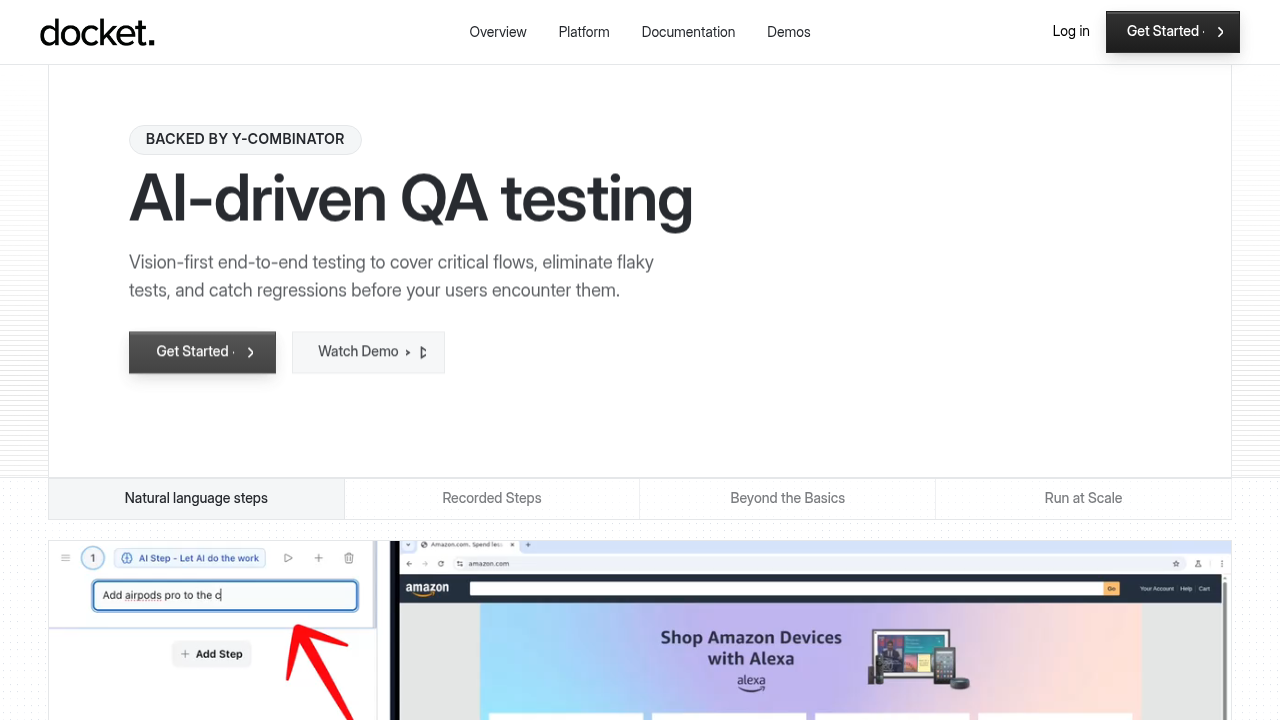
Docket replaces Perfecto's device cloud approach with vision-first automation built for web applications. While Perfecto provides infrastructure for DOM-based frameworks like Selenium and Appium, Docket uses x-y coordinates and visual recognition to interact with UIs. Tests stay stable when elements move or change because they don't depend on selectors. This matters for complex web interfaces that break traditional automation.
With Perfecto, you write and maintain test scripts in Selenium or Appium. When applications change, engineers fix broken selectors. Docket's self-healing tests adapt automatically. Docket's step recorder saves common flows that stay stable across deployments. For regression tests or checkout validation, users create tests in natural language instead of writing code.
The coordinate-based method also works with canvas elements and complex UIs where DOM selectors fail. Perfecto acts as infrastructure for your existing test code. Docket replaces that layer with browser agents that understand intent instead of relying on element identifiers.
Other Perfecto Alternatives
QA Wolf records session-based tests and offers managed service support for maintenance. testRigor uses text-based commands that describe user actions without scripts. Katalon bundles mobile, API, and web testing for teams needing multi-layer validation. LambdaTest runs a cross-browser testing cloud with different pricing focused on device coverage.
Perfecto and LambdaTest solve device access problems. Katalon bundles multiple testing types. Docket is a strong Perfecto alternative, which solves maintenance and reliability problems that DOM-based testing creates for web applications.
Final thoughts on choosing Perfecto
Perfecto gives you broad device coverage, but the real work is writing and maintaining test scripts. Most Perfecto reviews point to selector maintenance as the hidden cost of DOM-based testing. Docket uses coordinates and visual recognition so tests don't break when your UI changes. If your team spends more time fixing automation than shipping features, coordinate-based testing is worth considering.
FAQ
What's the main difference between Perfecto and vision-based testing tools?
Perfecto provides cloud access to real devices where you run your existing Selenium or Appium scripts. Vision-based tools like Docket interact with applications through x-y coordinates and visual recognition instead of DOM selectors, which means tests don't break when UI elements move or change.
How much does Perfecto actually cost for a small team?
Perfecto starts around $300/month but typically requires annual contracts ranging from $15,000 to over $100,000 depending on concurrent users, device access, and features. You'll need to go through a sales cycle to get accurate pricing for your specific device matrix and test volume.
When should I consider alternatives to device cloud testing?
If you're primarily testing web applications and spending considerable time fixing broken selectors after UI changes, coordinate-based automation will reduce maintenance overhead. Device clouds like Perfecto make sense when you need physical device coverage for native mobile apps across dozens of OS versions. However, if you'd like to perform cloud testing and are also looking for better maintainability of your tests, then consider solutions like Docket.
Can Perfecto tests run reliably in CI/CD pipelines?
Perfecto integrates with Jenkins, GitLab, and Azure DevOps, but teams report network instability interrupting sessions and high-demand devices having wait times during peak hours. Test flakiness without clear explanations also requires reruns, which can slow down deployment pipelines.
.svg)

.png)

